Process management focuses on the organisation’s activities, optimising them through continuous improvement by identifying, selecting, describing, documenting and continuously improving processes.
What does process management involve?
This service reviews the organisational structure of your organisation and its management model. To perform this service, we follow the following steps:
- Define the roles and responsibilities of all departments and units within the organisation;
- Standardise key processes (process map) with a description of the workflow, planning systems and task allocation for each process. This can be a tool for improving ISO 9001 certification.
- Establish management systems based on process and result indicators, operational reports, monitoring and control reports, and scorecards;
- Structure the management model taking into account the current organisation and the strategy pursued.
- Support in the implementation and management of change.
- Evaluation of the results of the implementation process.
Process management models
Process management models facilitate understanding and optimising workflows through the creation of visual representations based on key business process data. This makes it easier to ensure that business processes consistently drive optimal results, and is therefore a good alternative for achieving continuous improvement.
Process management models are a technique that provides:
- Identifies areas for improvement. Models help to understand how a process works, with the aim of implementing improvements.
- Transparency. They clearly show how tasks are expected to be performed, who is responsible for them, and how a process contributes to the achievement of an objective.
- Agility and flexibility. Models allow improvements and objectives to be identified and implemented immediately with agility and flexibility.
- Establishes a system. Models help identify best practices across units to implement efficient procedures. Helps establish a new business model.
What models do we use?
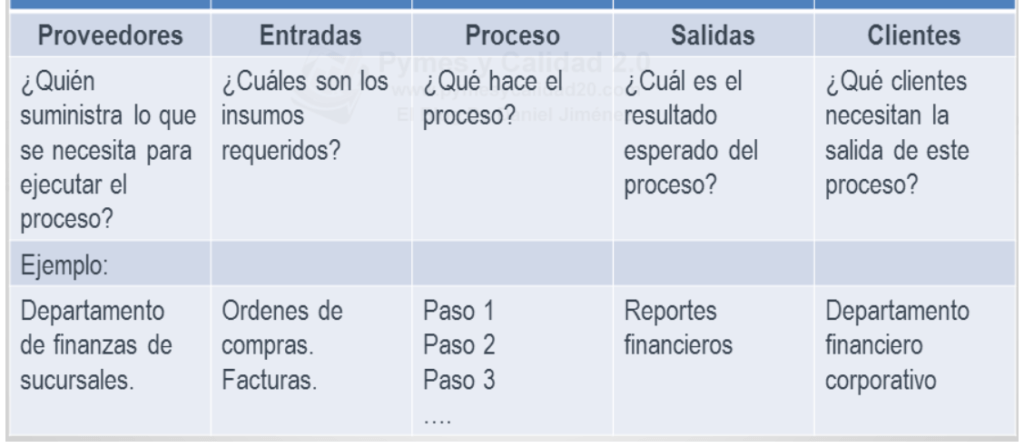
SIPOC diagrams
SIPOC diagrams are a tool used in the Six Sigma methodology. Six Sigma is a tool that provides various techniques and tools for process improvement. One of these business process modelling tools is a SIPOC diagram.
SIPOC is an acronym that helps stakeholders identify the key elements of a process at the outset. The ‘s’ in SIPOC stands for suppliers. The ‘i’ stands for inputs. The ‘p’ stands for the process to be improved. The ‘o’ stands for outputs. And the ‘c’ stands for the customers for whom the outputs are intended.
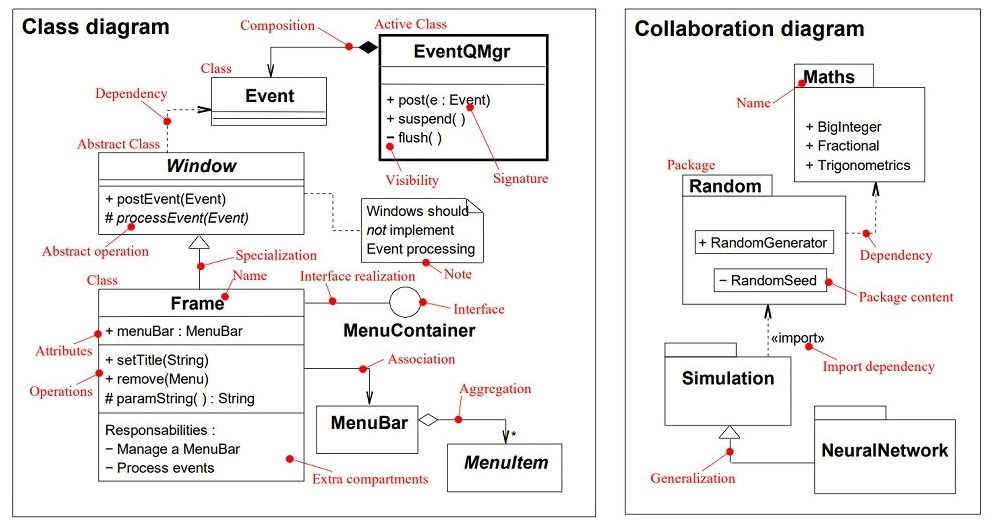
UML diagrams
UML (Unified Modelling Language) is composed of various graphical elements that are combined to generate diagrams, following the rules established for combining the different elements.
The UML model describes what a system is supposed to do, but does not say how to implement that system. The most common UML diagrams and the concepts they represent are Classes, Objects, Use Cases, States, Sequences, Activities, Collaborations, Components, Deployment, and other characteristics.
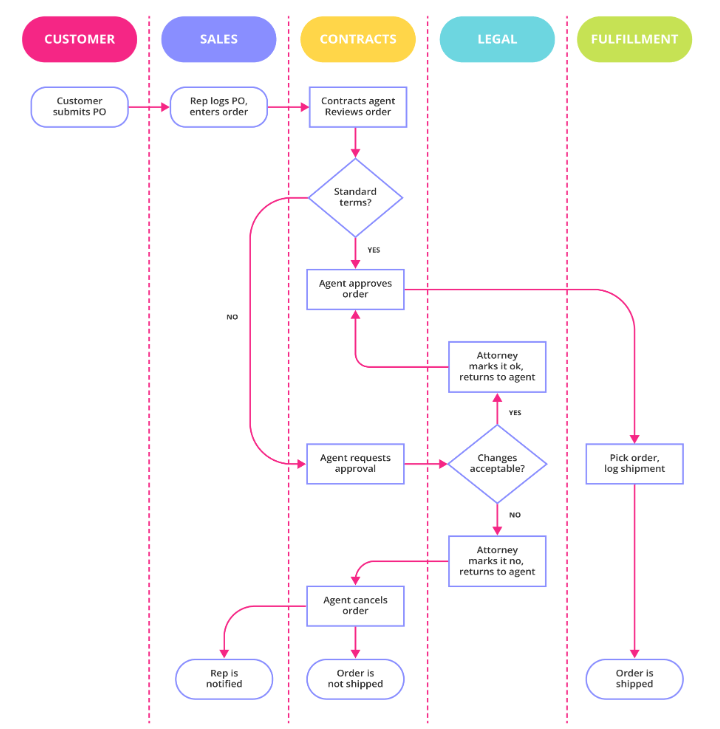
BPMN process maps or BPMN
BPMN, or Business Process Modelling Notation, is a flexible flowchart method that illustrates all the steps in a business process and can be applied for various purposes. The common elements of business process diagrams are:
- Flow objects. These include events, activities and gateways.
- Connecting objects. Solid lines indicate the transfer of tasks, while dashed lines show messages.
- Swim lanes. These detail the responsibilities of the sub-processes and the people or departments responsible for completing them.
- Artifacts. These are used to add information to a diagram that is not sequence or message flow.
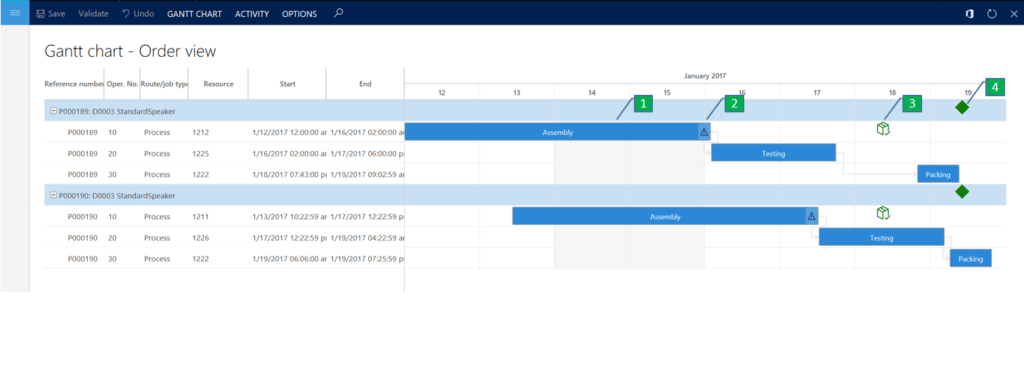
Gantt chart
Gantt charts visualise the time associated with specific tasks. They are ideal for time-sensitive processes. They show stakeholders when particular tasks should start and finish, and whether processes are being considered in the calendar. However, Gantt charts are not suitable for complex business processes.